
| Taijiang Notes · No.01 | Issue · Landscapes of the Old City |
— The Vanished Sea Issue —
Taijiang
T A I J I A N G
Three hundred years ago, this was the sea.Today it is fish farms, temple forecourts and a national park.
| LOCATIONAnnan District, Tainan | CHANGEDThe third year of the Daoguang reign | FROM 3DOOR25 minutes by car | BEST TIMEAfternoon to sunset |
Drive northwest out of central Tainan, cross the Yanshui River, and the road suddenly straightens and widens as the sky opens up.
On both sides are fish ponds laid out in neat squares, their surfaces catching the afternoon light. Egrets stand on the banks here and there; beyond them a windbreak forest, and beyond that the sea. This is Annan, Tainan’s largest district by area and also its youngest – so young that the land itself appeared two hundred years later than the old streets and old temples of the city.
Because the whole plain you are looking at was not on the map three hundred years ago.
The ground beneath your feet was once open water.And that water had a name: Taijiang.
|
🎙
|
Taijiang Notes · PODCAST · No.01 The Tainan that grew from the seabed: Annan District No time to read? Walk Taijiang by ear: from the nation’s gateway to the flood, and on to a plain of fish ponds |
One
A sea, and its gate
Picture Tainan three hundred years ago.
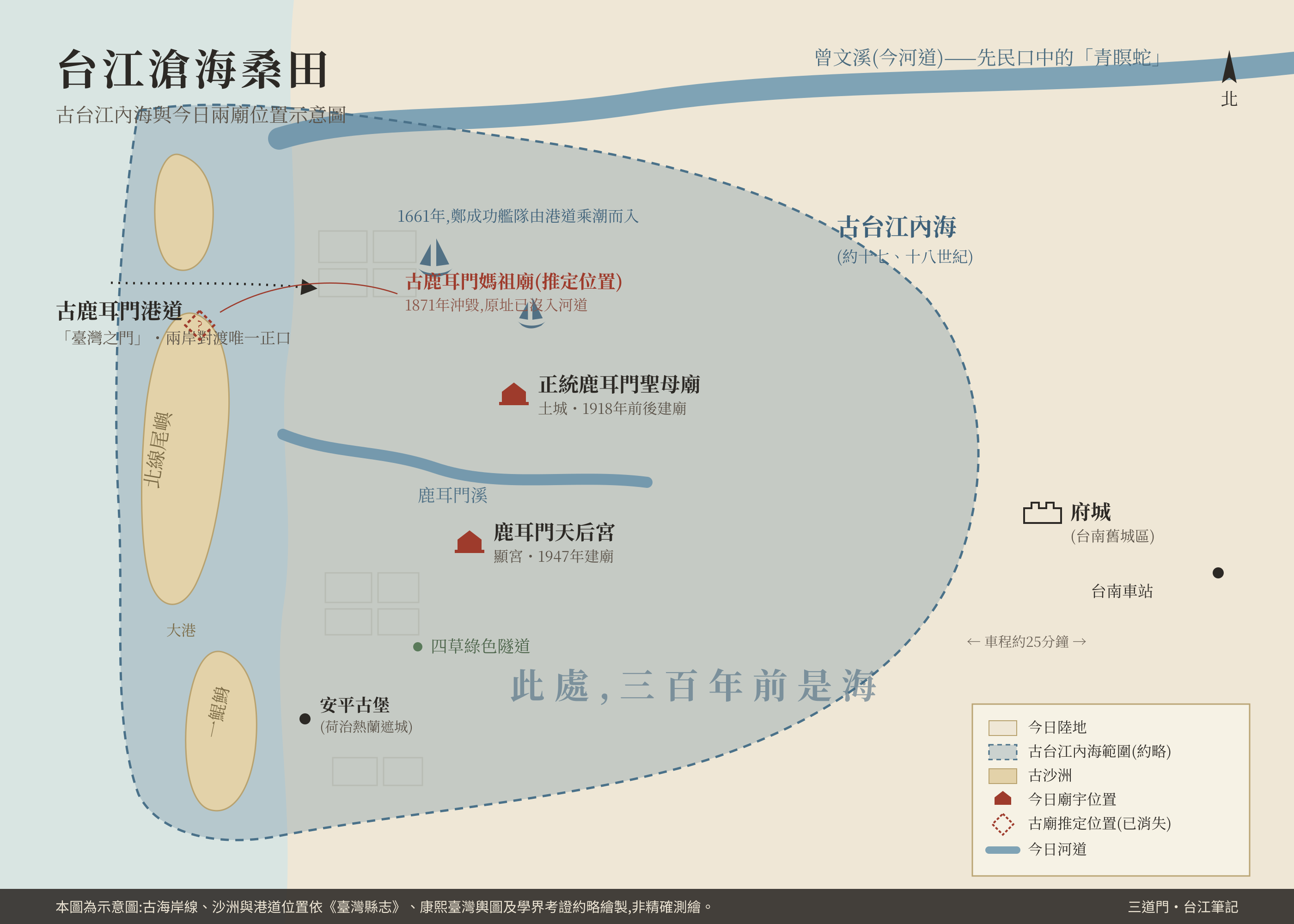
The coastline was not where it is today. From what is now Annan District all the way to the edge of the city lay an inner sea called Taijiang – not open ocean but a lagoon enclosed by a string of sandbars, calm on the surface and deep enough to anchor ships: a great natural harbour. The Qianlong-era Revised Gazetteer of Taiwan Prefecture formally recorded the place name Taijiang, running from Qikunshen in the south to Xiaolong in the north.
Between one sandbar and the next lay a narrow tidal opening. The channel twisted, hidden reefs crowded it, and the sand spits on either side were shaped like a deer’s ears – so the early settlers called it Luermen, the Deer Ear Gate.
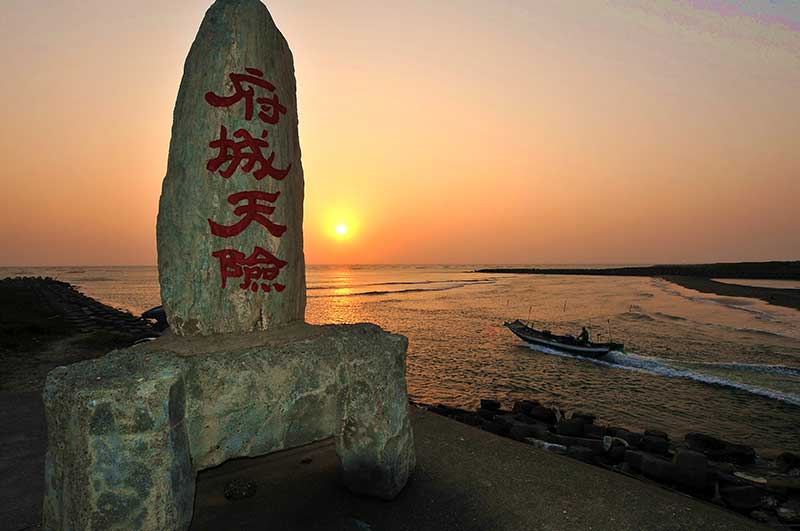
Don’t be fooled by how treacherous it looks. This narrow gate was once the front door of the entire island.
Dutch merchant ships passed through carrying deer hides and sugar to Japan and Batavia. Koxinga’s fleet rode a spring tide through it, crossing the shallows to strike at Fort Zeelandia. After the Qing took over, the court designated this the only legal port for crossings between Taiwan and the mainland – every lawful traveller and every lawful cargo had to pass through this gate.
Those were Taijiang’s busiest years. A thousand sails moved along the channel; garrisons, trading houses and temples lined the shore; goods travelled the waterways into the Five Channels of the old city and out to households across town. The old markets, old street blocks and old trades familiar to Tainan people today nearly all have their source on that stretch of water.
Luermen was the gateway to the nation in that era.
Two
The blind snake: how one river redrew the map
What changed everything was not a war but a river.
The Zengwen River – the early settlers called it the blind snake. On the plain it could not see where it was going, and every few decades it violently changed course; nobody knew which way it would bolt next.
In the seventh month of the third year of Daoguang (1823), a storm brought an astonishing volume of water. The snake turned, shifted course to empty at Luermen, and poured the entire collapsed silt load of the upstream hills straight into the Taijiang Inner Sea.
But the story doesn’t end there. The water retreated, and people arrived.
In the seventh year of Daoguang (1827), the Taiwan military circuit intendant Kong Zhaoqian issued reclamation permits and the new land was opened for settlement. Migrants from along the coast poured in, put up thatched huts, built embankments and fish ponds, and dug channels to bring in water. The soil was too salty for ordinary crops, so they farmed fish, made salt and planted salt-tolerant grains, establishing themselves hut by hut among the silver grass.
These became what Tainan people call the sixteen settlements of Taijiang – sixteen villages grown up out of the seabed. The similar-sounding place names across Annan District today – Xidingliao, Haiweiliao, Gongqinliao, Xuejialiao, Shiertian, Benyuanliao – each carry the story of a group of people starting again on unclaimed ground.
A note on place names
As you drive through Annan, look at the names on the road signs. Those containing liao usually began as clusters of thatched huts built by early migrants; those containing tian relate to leased and reclaimed land; and wen means a fish pond. The names themselves are a history of settlement, and this is the easiest district in Tainan in which to read history straight off a map.
The Zengwen River changed course several more times, redrawing the coastline each time. By the early twentieth century, only the small surface of Sicao Lake remained of the Taijiang Inner Sea – the sole relic of all that water.
Three
Taijiang today: a half-day route
What was seabed three hundred years ago is now a landscape you can walk. The four stops below are, we think, the best order in which to feel Taijiang: beginning on the water and ending with the sunset.
Stop one · Sicao Green TunnelSeeing the shadow of the inner sea from the water
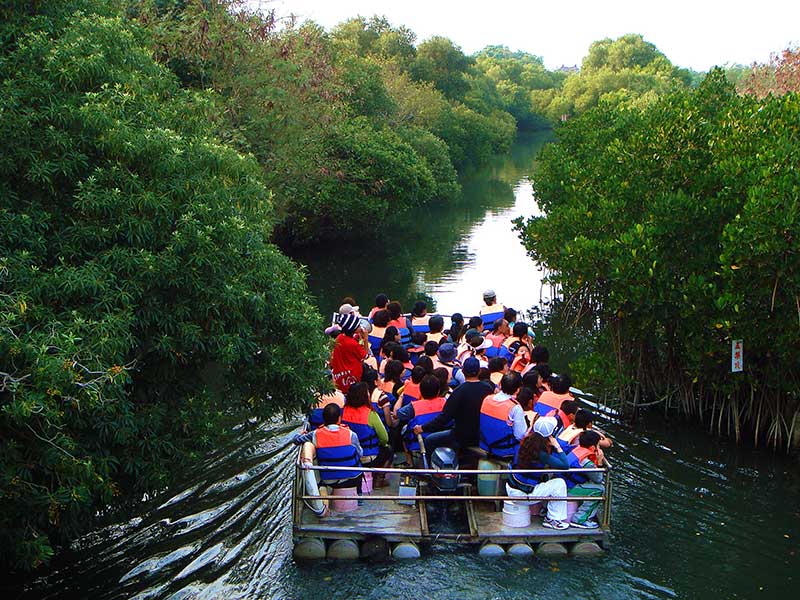
Board a bamboo raft and slide slowly into a waterway wrapped in mangroves. The branches meet overhead, the light turns green, and all that is left is the sound of the pole in the water. This channel was originally an old salt canal from the Japanese colonial period; today it is the best-known stretch of scenery in Taijiang National Park.
The water itself is worth noticing. It is half fresh and half salt, moving with the tides – exactly the character the Taijiang Inner Sea left behind. The fiddler crabs and mudskippers beside the channel are residents that can only survive where fresh and salt water meet.
Take the earliest departure: fewer people, low-angled light, and the birds are more willing to show themselves. The Taijiang National Park Visitor Centre next door is a stilt building standing over the water – white walls, timber structure and reflections running together – and is worth a stop in itself if you care about architecture.
Stop two · Luermen Tianhou TempleAncient rites and a sea wind
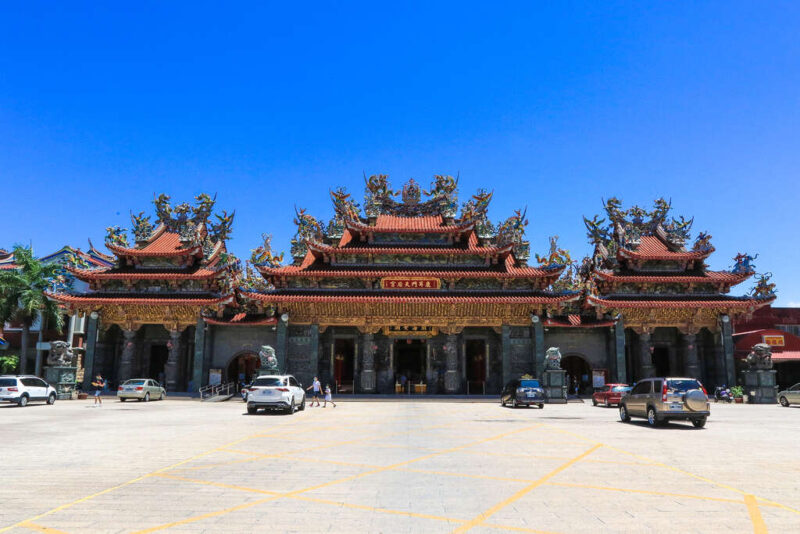
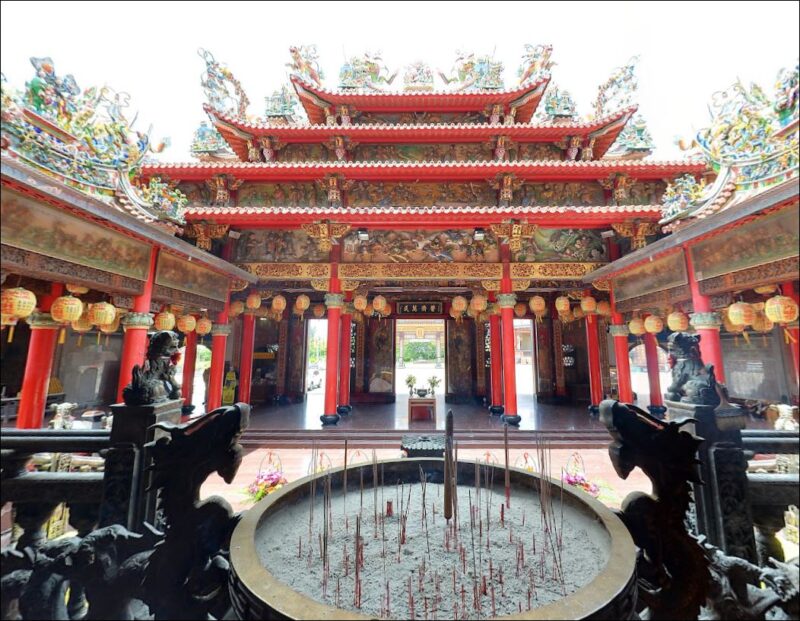
A Matsu temple in the Matsu Temple settlement on the south bank of the Luermen River. The forecourt is broad, with old trees, and the wind off this salt-laden land never stops; there is a distinct sense that time runs slower here.
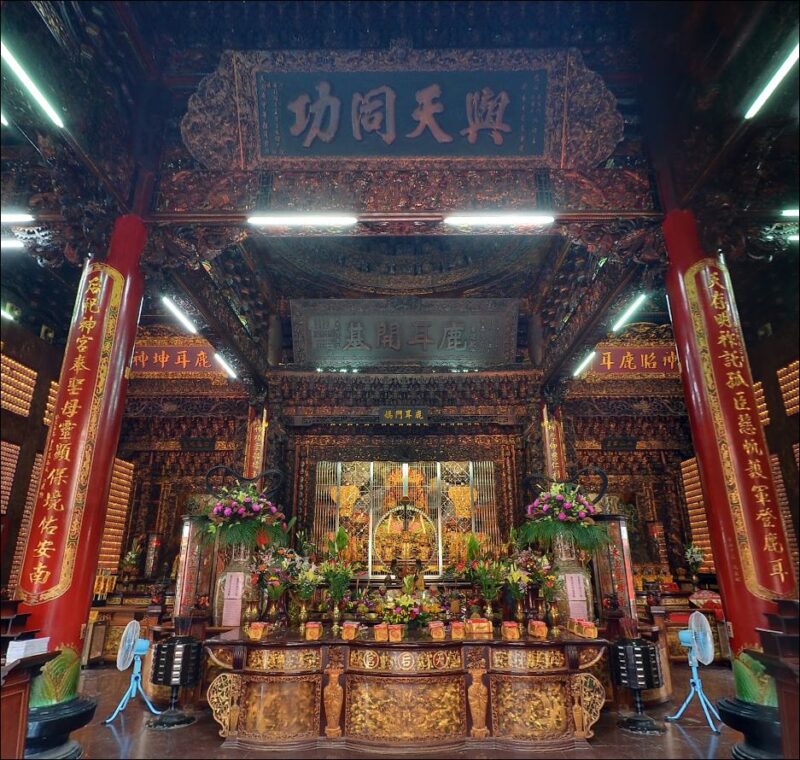
What makes Tianhou Temple particular is its ritual calendar. The sealing and sending off of the gods on the 24th day of the 12th lunar month, and the welcoming of the gods with rites and music on the 4th day of the first month, are performed according to ancient forms and are registered as a Tainan municipal folk custom. Every three years, the procession from Xigang Qing’an Temple comes here on pilgrimage, an important route within Tainan’s incense-procession culture.
 |
 |
A stone marker for Koxinga’s landing place stands not far from the temple. A few steps further on is the mouth of the Luermen River.
Stop three · Orthodox Luermen Matsu TempleFaith built as a city
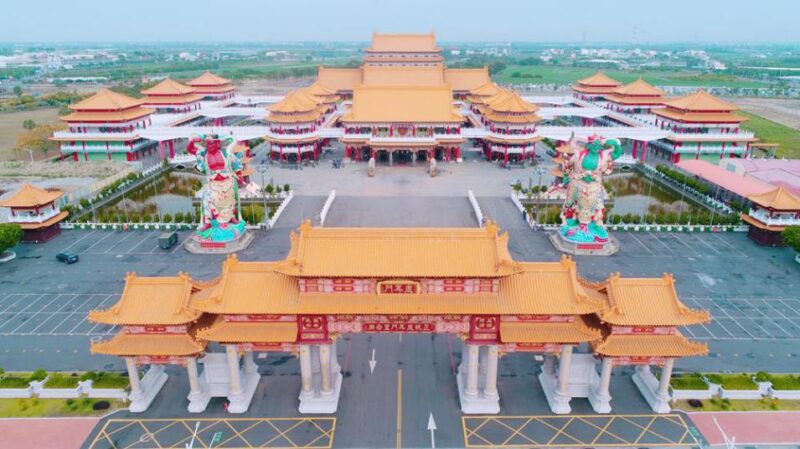
Cross the river to Tucheng on the north bank. Most people standing in front of this temple for the first time pause for a moment – the scale is less that of a temple than of a palace city.
Four courtyards of halls laid out along a central axis in the manner of the Forbidden City: the Hall of the Five Kings, the Matsu Hall, the Buddha Hall and the Hall of the Jade Emperor, one behind the other, with a moat running around the outside. In front stand giant statues of the guardian generals Qianliyan and Shunfeng’er, and a Luermen archway spanning the road. In sheer architectural scale this is one of the most talked-about Matsu temples in Taiwan.
The temple is best known at Lantern Festival. The aerial fireworks and beehive rockets around that date are a national-level spectacle: by day a procession welcoming the spring ox, by night fireworks filling the sky. And in the years of the ox, dragon, goat and dog, the triennial Tucheng incense procession takes place, with a centipede procession clearing the way and the royal boat leaving its dock – also a Tainan municipal folk custom. Incidentally, the Yue Lao here is well regarded too, and the matchmaking register is covered in wedding invitations left in thanks.
A further note
People often ask why there are two Matsu temples around Luermen. In the Qing dynasty there was a state-built Luermen Matsu temple here, recorded in the Tainan County Gazetteer, which was later destroyed by flooding from the Zengwen River; the original site no longer exists after the river shifted. The two temples of today each inherited part of the old temple’s incense and relics and each keep their own account of that lineage. The details of that inheritance are told differently by the two temples, and scholarship has reached no settled conclusion. We describe them here purely as places to visit and make no judgement on the question; anyone who wants to go deeper is welcome to ask the temples directly or consult the relevant temple and local gazetteers.
Stop four · The mouth of the Luermen RiverWatching the sunset over the old channel
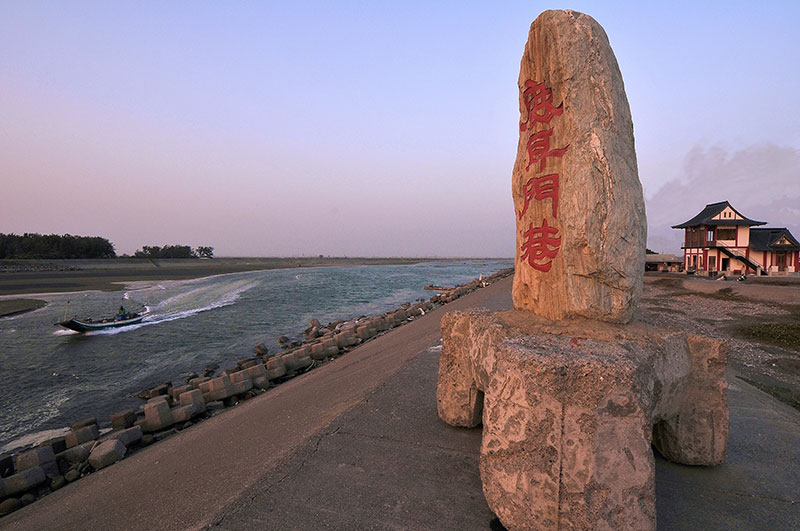
Save this for last. In the early evening the sun drops into the mouth of the Luermen River, oyster racks and small plastic boats floating on golden water, with the silhouette of the windbreak forest beyond. This is one of Tainan’s most underrated sunsets, precisely because it is not in Anping and not in the middle of the tourist map; the people who come are mostly locals and photographers.
Stand here and consider one thing: three hundred years ago the fleets came in from this direction, riding the incoming tide. The sea has retreated much further now, but the smell of the wind has probably not changed.
Coda
The youngest land, the longest story
Most people who come to Tainan walk the old city circuit: the Confucius Temple, Chihkan Tower, Shennong Street, Guohua Street. That is the city’s public face and the version of it people know best.
But drive twenty-five minutes towards the sea and you find another Tainan – one made jointly by silt, flood and human labour. There are no centuries-old streets here, because the land itself is only two hundred years old. And yet its story is longer, long enough that you have to begin with a sea.
Where there was once a sea,there are now fish ponds, temple forecourts and a national park.Taijiang’s transformation is the history lesson in Taiwan best measured on foot.
And the lesson is only twenty-five minutes by car from Tainan Railway Station.
Appendix
Practical information: getting there and what to do
Getting there– driving is easiest: about 25-30 minutes from Tainan Railway Station or West Central District, with under 10 minutes between each site and parking at all of them. Public transport is infrequent, so check the day’s routes and times before setting out, or arrange a private car to link the stops in one go.
Suggested route (half day)– bamboo raft through the Sicao Green Tunnel (take the first departure to avoid crowds) → Taijiang National Park Visitor Centre → Luermen Tianhou Temple (with the Koxinga landing marker nearby) → Orthodox Luermen Matsu Temple → sunset at the mouth of the Luermen River. You can reverse it and save the lit-up Matsu temple for after dark.
When to go– weekday afternoons are quietest, with the sunset in the early evening. For something livelier, choose Lantern Festival (fireworks at the Matsu temple) or around Lunar New Year (the sending off and welcoming rites at Tianhou Temple). The years of the ox, dragon, goat and dog are Tucheng procession years, when you can see the centipede procession and other rarely seen traditional troupes. Summer sun is strong, so bring sun protection and water.
Frequently asked questions
QWhat was the Taijiang Inner Sea, and can you still see it?
The Taijiang Inner Sea was a large lagoon on what is now the western side of Tainan, enclosed by sandbars, and an important harbour in Taiwan before the late Qing. After the Zengwen River changed course in 1823 and brought in vast quantities of silt, it gradually became land, forming today’s Annan District. The clearest surviving trace is Sicao Lake, along with the channels and wetlands around Sicao.
QHow should I plan half a day in Taijiang, and how long does it take?
Allow half a day to a full day. A good order is the Sicao Green Tunnel → Taijiang National Park Visitor Centre → Luermen Tianhou Temple → Orthodox Luermen Matsu Temple → sunset at the river mouth. Each stop is about 10 minutes from the next, and about 25-30 minutes from central Tainan.
QDo I need to book the Sicao Green Tunnel? When is best?
Bamboo raft tickets are sold on site. Weekends are busier, so take the first departure. The trip lasts about 30 minutes. Actual operating hours and prices follow the notices on site; check before you travel.
QWhy are there two Matsu temples around Luermen?
In the Qing dynasty there was a state-built Luermen Matsu temple here, later destroyed by flooding from the Zengwen River; the original site no longer exists. Today’s Luermen Tianhou Temple (in the Matsu Temple settlement) and Orthodox Luermen Matsu Temple (in Tucheng) each inherited part of the old temple’s incense and relics and each keep their own record of that lineage. The two temples describe the details differently and scholarship has not settled the question. They are about ten minutes apart by car and can be visited together.
QWhich temple holds the Lantern Festival fireworks?
The Orthodox Luermen Matsu Temple in Tucheng, which holds aerial fireworks and beehive rockets around Lantern Festival each year. Exact dates follow the temple’s own annual announcement.
QIs there etiquette for visiting the temples? Can I take photographs?
Both temples welcome visitors. You may photograph the forecourts and exteriors freely; inside the halls, check the temple’s notices first, avoid flash, don’t frame your shot standing directly in front of the principal deity, and don’t step across the incense tables or offering tables. If a ceremony or procession is passing, stand aside and let it through rather than cutting across it. Rules on joss paper and incense follow each temple’s current practice, so asking at the service desk is the most reliable approach.
Further reading
| Shuixian Temple Market · Into Tainan’s seafood larder and a century of devotionTaijiang’s waterways ran all the way into the old city, and this was the end of the line |
| Walking Tainan’s markets · Five markets, five charactersFrom landscape back to daily life: another walking route through the old city |
| Butler route Vol.01 · A 2.6 km morning walk through the old cityBefore you set out for Taijiang, walk the old city first |
| Where to stay near Tainan Railway Station · Five minutes on footBase yourself in the old city and Taijiang and Anping are both within half an hour |
#TainanStay #TainanHotel #TaijiangInnerSea #SicaoGreenTunnel #TaijiangNationalPark #Luermen #TainanAttractions #TaijiangNotes
