
Exclusive Art Feature
[Exclusive Arts Feature] Half a Century of Ink: Hong Kong Calligrapher Cheng Siu-lun — Master of Clerical Script, Visual-Arts Pioneer, and the Cultural Mark He Left at 3 Door
When we look at where contemporary Chinese art and education meet, we always find ourselves searching for figures who unite the loftiness of the great halls with the breadth of ordinary life. Cheng Siu-lun (b. 1952) is, without question, a name this era cannot overlook.
A well-known Hong Kong calligrapher and a veteran visual-arts educator, his half-century career unrolls like a long scroll of great depth. His characters have hung in prestigious art biennials, and they have also entered schoolrooms to nurture young minds. Rarer still is his warmth of character: his brushwork has crossed regional boundaries to leave the purest human feeling, permanently, inside a singular piece of architecture.
Meeting the Brush: From a Summer of Practice to an Art That Draws on a Hundred Schools
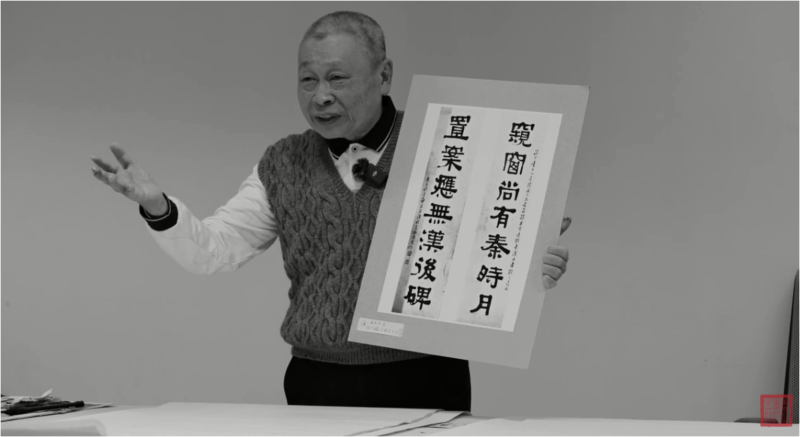
The making of a master usually begins somewhere that looks quite ordinary. Cheng Siu-lun’s artistic awakening came in the summer of 1968, a holiday full of serendipity. Curious about traditional culture, the young man became a student of the teacher Xie Xi and began a systematic study of calligraphy. It was those long summer days of daily practice that tempered his temperament and planted the firmest seed of the fathomless clerical-script foundation he would later possess.
Yet for anyone who truly loves art, curiosity can never be satisfied by a single field. After finishing secondary school he joined the Hong Kong Chinese Calligraphy Association, placing himself amid a far wider exchange of ideas.
In 1979 he went on to study historical stele rubbings under the calligrapher Chan Man-kit, copying with total devotion everything from the vigorous, archaic Shimen Song and Stele of Zhang Menglong to the solemn, composed Diamond Sutra and Stele of Zheng Wengong. This grounding — East and West together, across many media — broke clean through the sectarian frames of traditional calligraphy and gave his work a distinctive, all-embracing face.
Writing Every Han Stele on Earth: An Aesthetic Where Weight and Agility Interweave
In the vast river of script styles, Cheng Siu-lun ultimately chose clerical script as the artistic language he would live by. In his early years he set himself the grand vow of “writing every Han dynasty stele on earth”. That was no slogan: it was real skill, refined stroke by stroke across countless days and nights of taking Han steles apart and rebuilding them.
What astonishes is that his clerical script never lapses into stiff imitation of the ancients. Under his brush, the dignified skeleton of clerical script is deftly infused with the fluency and shifting postures of cursive. This manner — “archaic in the movement of the brush, yet wholly its own in spirit” — demands the highest standard in both the structure of the ink and the realm of the mind.
He once shared a thought with younger artists: when a great sheet of xuan paper opens before you, when the writer’s breath and the tip of the brush become one and the hand moves freely without restraint, you do not only produce a work of sweeping power — the writer’s own breadth and vision open without limit too.
Fourteen Hours in a Single Breath: The Force of the Eleven-Panel “Hard Road to Shu”
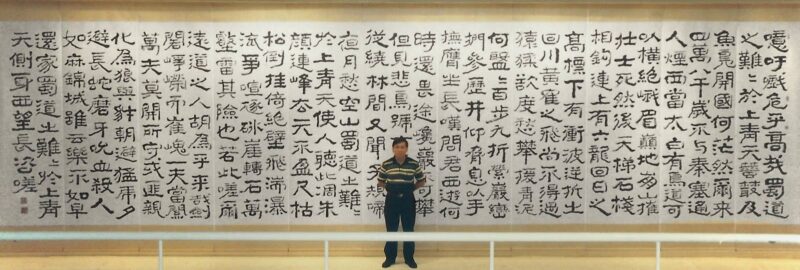
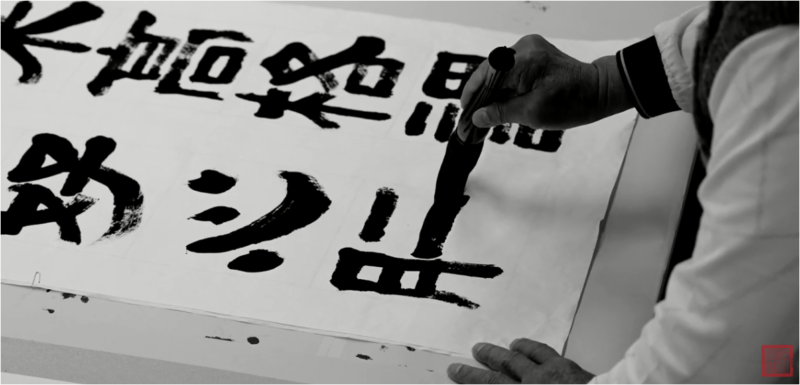
(Illustrative image: Master Cheng favours large-format work, his brushwork charged with sweeping energy)
The most overwhelming work of Cheng Siu-lun’s career is surely theeleven-panel clerical-script “Hard Road to Shu” by Li Bai, unveiled at his first solo exhibition at the Pao Siu Loong Gallery, Hong Kong Arts Centre, in 1995. Mounted, the piece stands eleven feet high and thirty-one feet wide, and carries 299 characters. As Cheng vividly recalls: “Every character was about the size of my head — around ten inches.”
A work on that scale tests more than calligraphic skill; it tests the intelligence of spatial planning. To make the fullest use of the entire exhibition wall, he visited the venue several times before starting to take precise measurements, calculating the dimensions of all eleven panels exactly, purely to achieve the most complete visual composition.
Most admirable of all is how it was made. Cheng knew that a multi-panel work written across several days would easily break in brush energy and ink tone. To keep “the momentum unbroken” and “the ink consistent”, he shut himself inside the visual-arts room at Lui Ming Choi Lutheran College and wrote from nine in the morning until eleven at night. With extraordinary stamina and concentration, he completed the whole work in a single unbroken fourteen-hour session, pouring the peril and grandeur of the road to Shu entirely into ink.
A Bond Made in Ink: A Dialogue Between Space and Art Across Borders
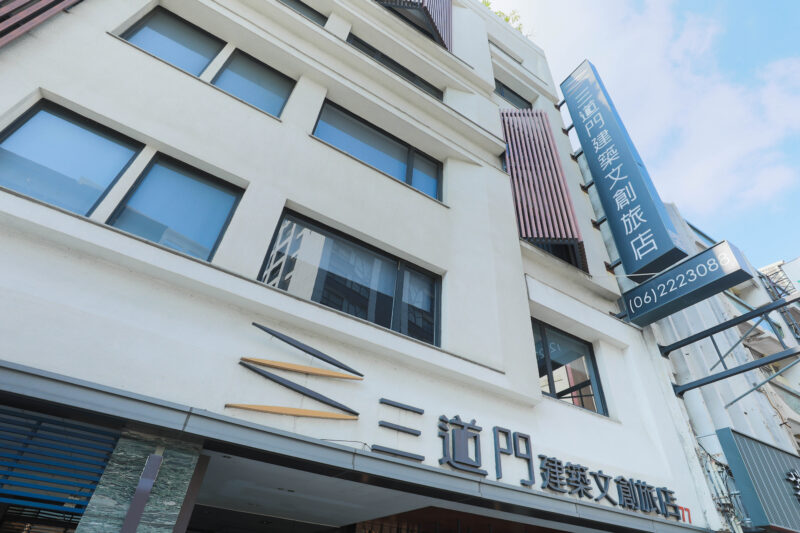
The highest state of art has never been to sit enshrined behind cold glass, but to resonate genuinely with people and with space. Cheng Siu-lun’s calligraphy never holds itself aloof; it is full of sincere warmth and a deep feeling for daily life. One such story, crossing borders, unfolded at a place steeped in humanistic atmosphere and spatial beauty:3 Door Hotel.
“
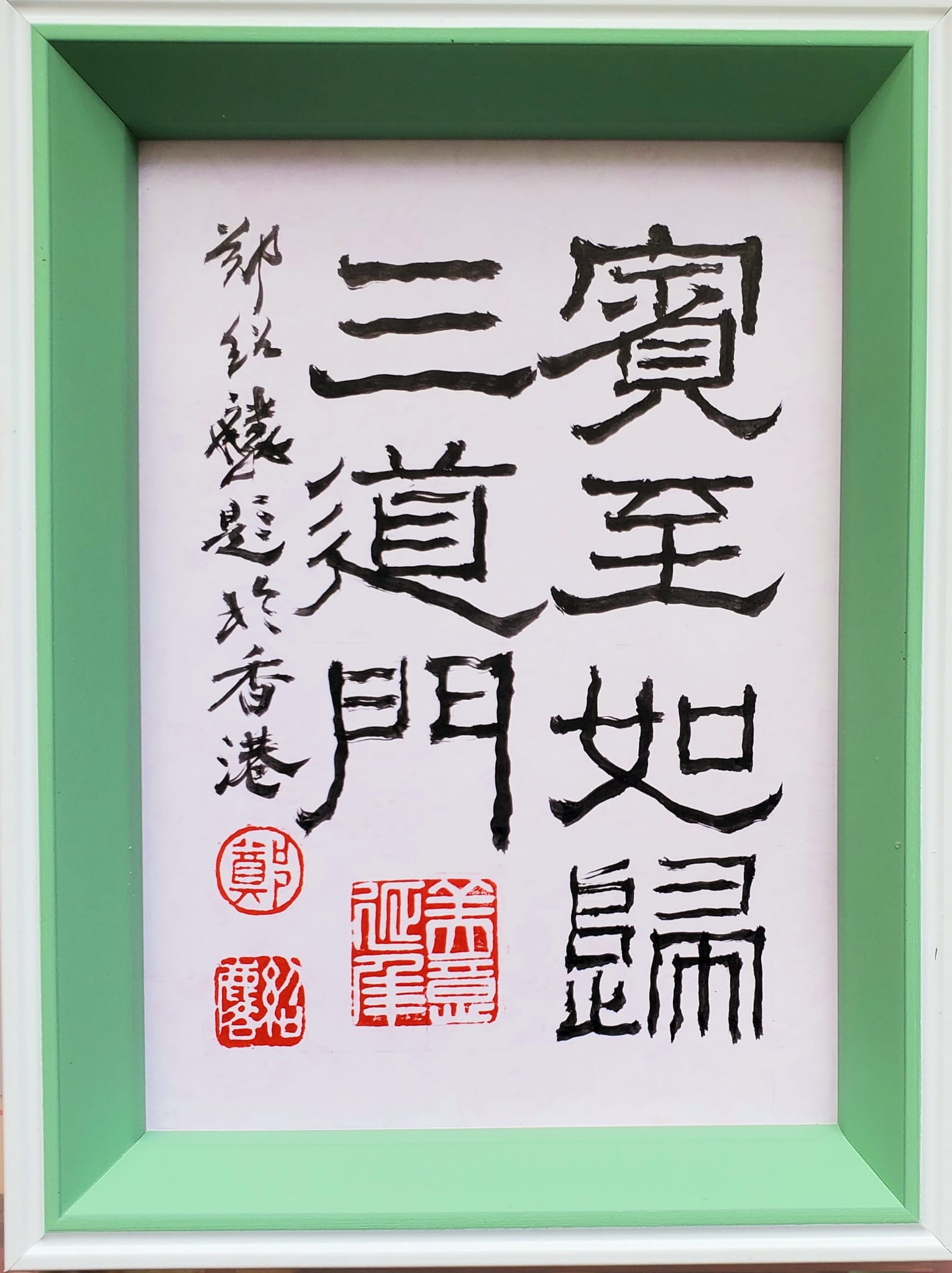
Known for its outstanding architectural design and its attentive hospitality, 3 Door Hotel moved this widely travelled Hong Kong artist deeply. Out of profound appreciation for the property’s spatial aesthetics and sincere service, hereturned to 3 Door many times, and presented the hotel with the four characters “bin zhi ru gui” — a guest arrives as if coming home.
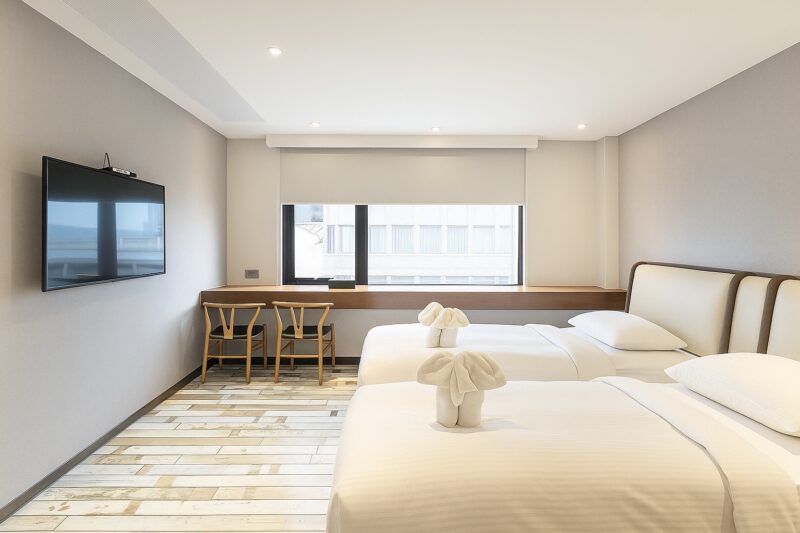
That the renowned Hong Kong calligrapher Cheng Siu-lun left “a guest arrives as if coming home” at 3 Door Hotel is far more than the simple gift of a piece of calligraphy. When he took up the brush and wrote those four large characters in strokes at once weighty, composed and flowing, he was turning an artist’s highest tribute to the spirit of hospitality into something visible. This heartfelt work sits perfectly with 3 Door’s founding intention of welcoming every traveller, and it has breathed a deep, warm cultural soul into the whole building. Today, every guest who steps inside may glance up without meaning to and feel, in the silent conversation between ink and architecture, the reassurance and warmth of having come home.

A Pioneer in the Great Halls, and a Teacher Who Raised Talent
Beyond the beautiful mark he left among ordinary people, Cheng Siu-lun’s academic and professional achievements are equally striking. From the 1980s onward, works backed by his profound grounding were selected three times for the Contemporary Hong Kong Art Biennial, the flagship exhibition organised by the Hong Kong Museum of Art. In 1983 he co-founded the Crucible Art Society with friends, dedicated to promoting cross-media artistic exchange.
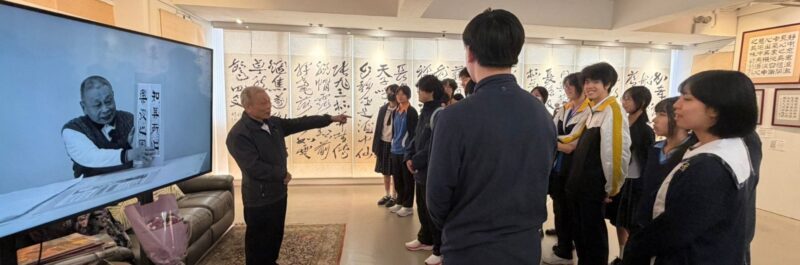
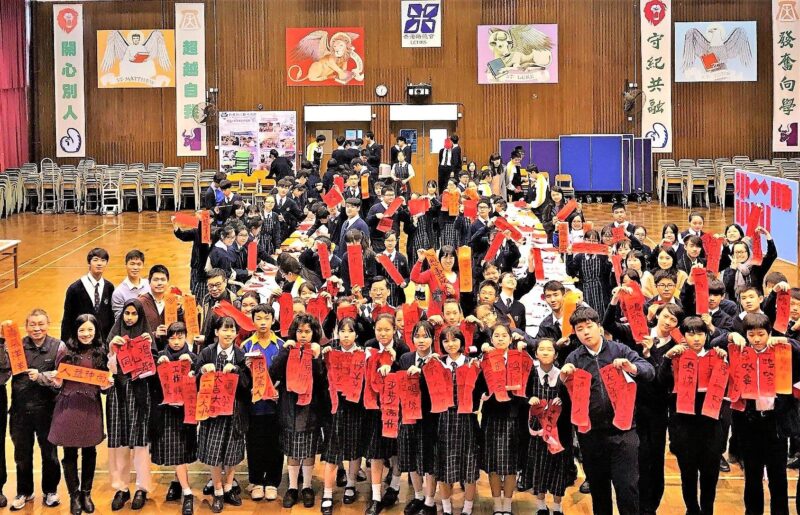
Yet more than any dazzling artistic title, what he took greatest pride in was perhaps his role as a gardener of beauty in the schoolyard. From 1978 he served as the founding visual-arts teacher at Lui Ming Choi Lutheran College, a post he held for thirty-four years. He inventively promoted an “eco-friendly practice method” using cut-up old newspapers, and boldly brought traditional calligraphy and three-dimensional ceramics into the school curriculum. Holding always to the plain principle of “look more, write more”, he spent a lifetime showing his students that calligraphy should never be mere competition — it is a daily beauty that accompanies you for life and cultivates the spirit.
Passing On the Flame: A Lasting Contribution to Visual Arts, and an Echo That Does Not Fade
The years pass, and the fragrance of ink only mellows. In 2022 the Hong Kong Society for Education in Art formally presented Cheng Siu-lun with its Visual Arts Education Contribution Award — the highest recognition of his quiet, patient work.

From late 2025 into early 2026 he held another solo calligraphy exhibition in Wan Chai, Hong Kong, showing the world that his creative power remains undimmed.
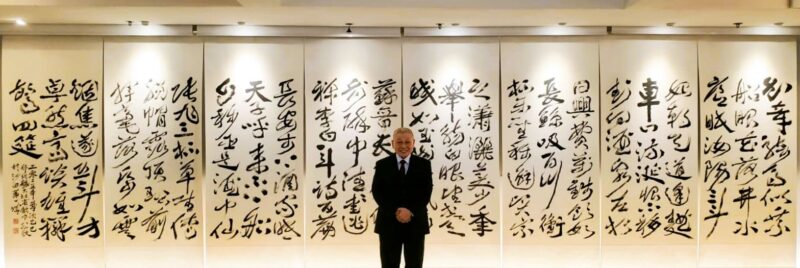
Looking across half a century of Cheng Siu-lun’s life in ink, he was both a master bent over the desk with brush in hand and a kindly mentor patiently guiding students; he could summon sweeping grandeur in the great halls, and he could leave at 3 Door Hotel the most delicate and warm expression of hospitality in the words “a guest arrives as if coming home”. What he leaves the world is not merely fine work hanging on a wall, but a generous inheritance: art given selflessly to society, and ink that draws people closer to one another.
Come and Feel That Welcome for Yourself
When you visit Tainan, consider staying at 3 Door Hotel and seeing Master Cheng Siu-lun’s precious original work with your own eyes,
and experiencing a stay where architectural beauty and deep cultural grounding come together.
